the
Literary Saloon
the literary
weblog
at the
complete review
about the saloon
support the site
archive


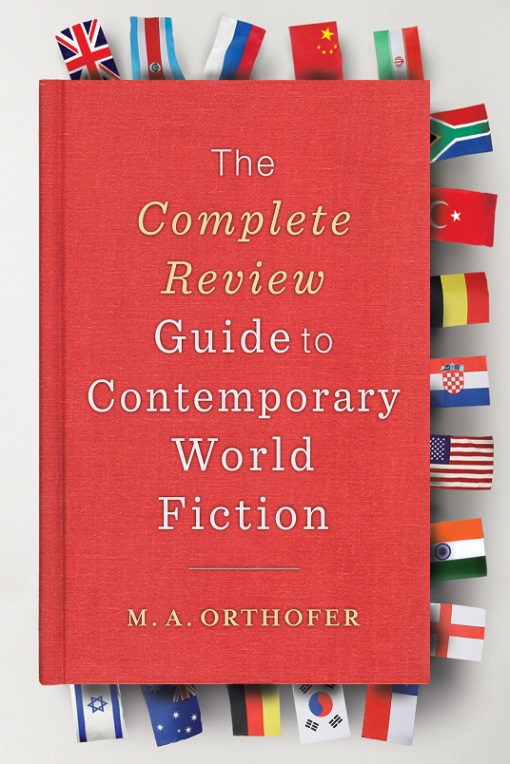
The CR Guide

The CR:the book
to e-mail us:

Books, Inq.
Bookninja
BookRiot
Critical Mass
Guardian Books
The Millions
MobyLives
NewPages Weblog
Omnivoracious
Page-Turner
PowellsBooks.Blog
Three Percent
Perlentaucher
Rép. des livres
Arts & Letters Daily
Bookdwarf
Buzzwords
The Millions
The Rumpus
Two Words
Waggish
See also: links page
opinionated commentary on literary matters - from the complete review
Mizumura Minae profile | C.M.Naim (1936-2025) | Fish Letters review
Mizumura Minae profile
In The Japan Times Hanako Lowry profiles the A True Novel- author, in Between reality and fiction: A summer’s day in Karuizawa with Minae Mizumura (possibly paywalled ?).
Disappointingly:Though she considers her latest novel to be her final work of fiction, Mizumura says she is now focusing more on the act of writing memoirs — a natural shift in Japanese literary tradition, she notes, for writers who reach a certain stage.(That latest novel is 大使とその妻; see also the Shinchosha publicity pages for volumes one and two.)
Interestingly:“I am sure AI will write wonderful stories in the future,” Mizumura says, pausing a moment before continuing. “I am glad I am shifting to memoir and writing my life’s stories as AI cannot write them with the same humanity.”
(Posted by: M.A.Orthofer) - permanent link -
C.M.Naim (1936-2025)
Urdu scholar C.M.Naim has passed away; see, for example, One of Urdu's Greatest Scholars, C.M. Naim, Passes Away and Narendra Pachkhédé on C. M. Naim and the Many Lives of Urdu, both at The Wire.
I would really love to see his Urdu Crime Fiction, 1890-1950: An Informal History; see the Orient BlackSwan publicity page.
(Posted by: M.A.Orthofer) - permanent link -
Fish Letters review
The most recent addition to the complete review is my review of a collection of stories by Goderdzi Chokheli, Fish Letters, now out from Dedalus.
Always good to see more translations from Georgian -- though Dedalus seems to be the only publisher currently doing this.
(Posted by: M.A.Orthofer) - permanent link -
The German book market, 2024 | Fanny Howe (1940-2025)
The German book market, 2024
As Christina Schulte reports at Börsenblatt, Die offiziellen Zahlen für den Buchmarkt 2024 sind da, as the German numbers for 2024 are in.
Turnover was up 1.8 per cent -- with Belletristik (basically trade fiction), which made up 36.6 per centof the market, up 4.3 per cent. Imterestingly, backlist titles (titles first published more than twelve months ago) made up 57 per cent of sales. Meanwhile, the number of new titles published dropped another 3.1 per cent, to 58,346. (As recently as 2019 70, 395 new titles were published.)
The percentage of titles that were translations increased from 14.5 per cent to 15 per cent.
The number of book-buyers decreseased 2 per cent, with the only age groups with an increase in book-buyers those aged 16 to 19 (up an impressive 9.6 per cent) and 20 to 29 (up 7.7.per cent).
(Posted by: M.A.Orthofer) - permanent link -
Fanny Howe (1940-2025)
American author Fanny Howe has passed away; not much coverage yet, but the Boston Globe has a (paywalled) report.
See Q & As with Howe at Bomb, The Kenyon Review, The Paris Review, and The White Review
(Posted by: M.A.Orthofer) - permanent link -
PEN Pinter Prize | Serge review
PEN Pinter Prize
English PEN has announced that Leila Aboulela has been awarded this year's PEN Pinter Prize, awarded: "to a writer resident in the United Kingdom, the Republic of Ireland, the Commonwealth or former Commonwealth who, in the words of Harold Pinter’s Nobel speech, casts an ‘unflinching, unswerving’ gaze upon the world, and shows a ‘fierce intellectual determination … to define the real truth of our lives and our societies’"
(Posted by: M.A.Orthofer) - permanent link -
Serge review
The most recent addition to the complete review is my review of Yasmina Reza's novel Serge, due out in English next month, from Restless Books.
(Posted by: M.A.Orthofer) - permanent link -
Upcoming books
Upcoming books
The Literary Hub recently published their Lit Hub's Most Anticipated Books of 2025, Part Two, and now The Millions has their Great Summer 2025 Book Preview, with: "just over 100 titles".
(Posted by: M.A.Orthofer) - permanent link -
Preserving the homes of Black literary figures | CARICON Prizes
Preserving the homes of Black literary figures
At The Guardian Nneka M Okona look in some detail at Who preserves the homes of Black literary giants (in the United States).
(Posted by: M.A.Orthofer) - permanent link -
CARICON Prize
They've announced the winners of the first CARICON Prize, a new prize for Caribbean literature awarded by the Caribbean Literature Conference.
Prizes were awarded in four categories; A House for Miss Pauline, by Diana McCaulay, took the fictipn prize; see the publicity pages from Algonquin Books and Dialogue.
The Lifetime Achievement Award for Caribbean Literature went to Earl Lovelace.
(Posted by: M.A.Orthofer) - permanent link -
Amitava Kumar Q & A | American Psycho review
Amitava Kumar Q & A
At Frontline Majid Maqbool has a Q & A with the author, in Reading is good when it disturbs you: Amitava Kumar.
Among Kumar's responses, the somewhat surprising:Your go-to Indian classic ? One that you would recommend everyone should read ?The only Kumar title under review at the complete review is A Foreigner Carrying in the Crook of his Arm a Tiny Bomb.
I have always liked Pankaj Mishra's Butter Chicken in Ludhiana.
(Posted by: M.A.Orthofer) - permanent link -
American Psycho review
The most recent addition to the complete review is my review of Bret Easton Ellis' notorious 1991 novel, American Psycho.
With books that got this much review (and other) coverage, it can sometimes be a real chore going through that for quotes, etc., but I rather enjoyed looking back on all the outrage about this one from back in the day.
(Posted by: M.A.Orthofer) - permanent link -
Philippe Jaccottet profile | Guyana Prize for Literature
Philippe Jaccottet profile
At swissinfo Mariella Radaelli reports how Literary world celebrates centenary of Swiss poet Philippe Jaccottet. (Jaccottet came close to celebrating himself, only passing away in 2021.)
Seagull has brought out several of his books; see their author page for him.
(Posted by: M.A.Orthofer) - permanent link -
Guyana Prize for Literature
They've announced the winners of the 2024 Guyana Prize for Literature -- though there doesn't seem to be an (active) official site for the prize, and the only report I could find -- at Stabroek News -- is largely paywalled, revealing the name of the author who took the fiction prize -- Oonya Kempadoo -- but not the work ..... But an older article on the shortlist-announcement reveals it must be Naniki; see also the Dundurn Press publicity page.
(Updated - 8 July): See now the report at Fondas Kréyol, which lists all the winners.
(Posted by: M.A.Orthofer) - permanent link -
Premio Strega | CWA Daggers
Premio Strega
They've announced the winner of this year's Premio Strega, the leading Italian novel prize, and it is L'anniversario, by Andrea Bajani; see also the Feltrinelli publicity page.
Almost a third of voters voted for this -- 194 out of 646 --, but three other titles got over 100 votes each, and the fifth got 99.
See also the Rice News profile, At Rice, novelist Andrea Bajani finds himself in translation.
The only Bajani title under review at the complete review is If You Kept a Record of Sins, while The Book of Homes is forthcoming from Deep Vellum in August; see their publicity page. This one should be out in English soon, too.
(Posted by: M.A.Orthofer) - permanent link -
CWA Daggers
The Crime Writers' Association has announced the winners of this year's CWA Daggers -- though not in one convenient press release; but see, for exmple the run-down at The Arts Shelf.
The only winning title under review at the complete review is the Crime Fiction in Translation Dagger-winner -- Sam Bett's translation of Otani Akira's The Night of Baba Yaga.
(Posted by: M.A.Orthofer) - permanent link -
Korean literature abroad | Blowfish review
Korean literature abroad
They recently held a forum on Strategies for fostering the Global Expansion of Korean Literature, and in The Korea Times Kim Se-jeong reports that Despite Han Kang’s Nobel win, Korean literature still struggles for global recognition, experts say.
In his keynote speech Kwon Young-min pointed out:Korean literature remains on the margins of global literary discourse, with international readers still lacking a deep understanding of its essence.While I'm no huge fan of this kind of status-seeking, at least they do put considerable effort into spreading the literary word -- would that more countries and languages did that .....
(Posted by: M.A.Orthofer) - permanent link -
Blowfish review
The most recent addition to the complete review is my review of Jo Kyung-Ran's 2010 novel Blowfish, now out in English.
(Posted by: M.A.Orthofer) - permanent link -
(Revised) Dutch canon | BRICS Literary Prize
(Revised) Dutch canon
Via, I'm pointed to the fact that, for the third time after 2015 and 2020, the (Flemish) Royal Academy for Dutch Language and Literature has released its Dutch literary canon-list of 50 (+1) essentiële werken uit de Nederlandstalige literatuur.
Re-considering such a list every five years seems like a good idea; it's also interesting to compare to the lists from 2015 and 2020.
The most recent title on the list dates back more than three decades -- Harry Mulisch's 1992 The Discovery of Heaven.
(Posted by: M.A.Orthofer) - permanent link -
BRICS Literary Prize
Though it was established last fall, they've apparently now 'launched' the new BRICS Literature Award, which: "targets authors of the BRICS countries" -- currently: Brazil, Russia, India, China, South Africa, Egypt, Ethiopia, Iran, the United Arab Emirates, and Indonesia.
At Realnoe Vremya Ekaterina Petrova reports on it, in ‘Between the Prix Goncourt and the Nobel’: BRICS Literary Prize makes an ambitious claim -- though it turns out that this claim is that:neither publishers nor authors will submit applications; instead, the jury will nominate candidates from each country. Furthermore, the nominations will be for authors themselves, not specific works.Each of the ten national juries will apparently nominate three writers (the longlist), with one writer from each country then making the shortlist. Translating the works for the jurors from the different countries to judge them would seem to be a problem .....
(Posted by: M.A.Orthofer) - permanent link -
Österreichischer Staatspreis für Europäische Literatur
David R. Slavitt (1935-2025) | Speaking in Tongues review
Österreichischer Staatspreis für Europäische Literatur
They've announced the winner of this year's Austrian State Prize for European Literature, a leading author-prize for ... European authors, with an excellent list of previous winners, and it is Serhiy Zhadan.
Several works by Zhadan are under review at the complete review:
- Anarchy in the UKR
- Depeche Mode
- Mesopotamia
- The Orphanage
- Voroshilovgrad
- What We Live For, What We Die For
(Posted by: M.A.Orthofer) - permanent link -
David R. Slavitt (1935-2025)
Poet and translator David R. Slavitt -- who also wrote fiction as, among others, 'Henry Sutton' -- passed away in May, and Clay Risen's obituary (presumably paywalled) of him is now up at The New York Times.
I am only familiar with his translations -- with only his translation of Jean de Sponde's Sonnets of Love & Death under review at the complete review -- but he had ... considerable success with the novel The Exhibitionist, published under the pseudonym Henry Sutton; it apparently sold four million copies .....
(Posted by: M.A.Orthofer) - permanent link -
Speaking in Tongues review
The most recent addition to the complete review is my review of Nobel laureate J.M.Coetzee and Mariana Dimópulos' exchanges on language and translation, in Speaking in Tongues.
(Posted by: M.A.Orthofer) - permanent link -
Writing Australia
Writing Australia
Creative Australia has launched a new body today, Writing Australia, to support and promote "the Australian literature sector" and "the development of markets and audiences for Australian literature" -- with A$26 million to spend over the next three years
See also Esther Anatolitis wondering in The Guardian, Writing Australia: can the new national literature body make a real difference for authors ?
(Posted by: M.A.Orthofer) - permanent link -
Ingeborg-Bachmann-Preis | Tash Aw Q & A
Solidaridad Bookshop for sale
The World's Greatest Detective and Her Just Okay Assistant review
Ingeborg-Bachmann-Preis
They held the Ingeborg Bachmann Prize -- the German-language read-in-front-of-a-jury prize -- and they've announced the winning text, DA STA (warning ! dreaded pdf format !), by Natascha Gangl.
With an opening line of: "Wou g'heastn du hi ?" non-native speakers might find it ... challenging.
(Posted by: M.A.Orthofer) - permanent link -
Tash Aw Q & A
At Scroll.in Chaitanya Srivastava has a Q & A with the author, mainly about his new novel The South, in: ‘Silences reveal as much as noise’: Malaysian writer Tash Aw on his new coming-of-age novel.
(Posted by: M.A.Orthofer) - permanent link -
Solidaridad Bookshop for sale
The Solidaridad Bookshop in Manila, founded by Sin-author F. Sionil José 59 years ago, is up for sale; see, for example, Angeli Ruth R. Acosta's report in The Varsitarian, F. Sionil José’s Manila bookshop up for sale.
(Posted by: M.A.Orthofer) - permanent link -
The World's Greatest Detective and Her Just Okay Assistant review
The most recent addition to the complete review is my review of Liza Tully's The World's Greatest Detective and Her Just Okay Assistant, coming out shortly.
(Posted by: M.A.Orthofer) - permanent link -
Pak Kyongni finalists | Hemang Ashwinkumar on translation
Pak Kyongni finalists
I missed this last week, but they've announced the three finalists for this year's Pak Kyongni Prize, and they are: Salwa Bakr, Amitav Ghosh, and John Banville; see Hwang Dong-hee's The Korea Herald report.
This author prize has been awarded since 2011, and it has a solid list of previous winners.
The winner will be announced in September.
(Posted by: M.A.Orthofer) - permanent link -
Hemang Ashwinkumar on translation
At The Wire Hemang Ashwinkumar writes on English and a Translator's Shame.
(Posted by: M.A.Orthofer) - permanent link -
Académie française palmarès | Geoff Dyer Q & A
Nobel laureate named to Académie française | Richard Flanagan Q & A
Académie française palmarès
The Académie française has announced (warning ! dreaded pdf format !) its (many) palmarès -- 71 'distinctions', with Akira Mizubayashi being awarded the Grand Prix de la francophonie and Alice Kaplan getting the Grande médaille de la francophonie.
(Posted by: M.A.Orthofer) - permanent link -
Geoff Dyer Q & A
At the New Left Review's Sidecar Leo Robson has a lengthy Q & A with Geoff Dyer, in Theory in the Air.
(Posted by: M.A.Orthofer) - permanent link -
Nobel laureate named to Académie française
They've elected a new 'immortel' to the Académie française -- though perhaps not one most will have read anything by: it's Alain Aspect, who shared the 2022 Physics prize with John F. Clauser and Dance of the Photons-author Anton Zeilinger.
Aspect's Einstein and the Quantum Revolutions recently came out in English -- see the University of Chicago Press publicity page --; I have a copy and do hope to get to it soon.
Aspect won the election for fauteuil 22 overwhelmingly, with sixteen votes, the two other contenders each only receiving a single vote.
(Posted by: M.A.Orthofer) - permanent link -
Richard Flanagan Q & A
This week's 'The books of my life'-column features the Gould's Book of Fish-author, in Richard Flanagan: ‘When I reread Evelyn Waugh’s Scoop it had corked badly’.
Among his responses:The book or author I came back to
When I was young, Thomas Bernhard seemed an astringent, even unpleasant taste. But perhaps his throatless laughter, his instinctive revulsion when confronted with power and his incantatory rage speak to our times.
(Posted by: M.A.Orthofer) - permanent link -
Hidden Heroes review
Hidden Heroes review
The most recent addition to the complete review is my review of a new Anthology of North Korean Fiction, Hidden Heroes.
We get a ton of stuff from South Korea now, but still far too little from the North, so it's good to see a bit more -- though of course my preference would be for novels, rather than stories.
Meanwhile, don't forget the invaluable (if too rarely updated) North Korean Literature in English weblog.
(Posted by: M.A.Orthofer) - permanent link -
New World Literature Today | Orwell Prizes
New World Literature Today
The July/August issue of World Literature Today is now out, with a focus on 'Gaza Voices' and a section devoted to 'Guadalupe Nettel: The 2025 Puterbaugh Fellow'.
And, of course, there's the Book Review section.
(Posted by: M.A.Orthofer) - permanent link -
Orwell Prizes
They've announced the winners of this year's Orwell Prizes -- though not yet at the official site, last I checked, but see, for example, the report in The Guardian.
Heart, Be at Peace, by Donal Ryan, took the Political Fiction Book prize; see also the publicity pages from Penguin and Viking, or get your copy at Amazon.com, Bookshop.org, or Amazon.co.uk.
(Posted by: M.A.Orthofer) - permanent link -
EBRD Literature Prize | Shortlists: Europese Literatuurprijs - Miles Franklin
International Booker Prize judging panel
EBRD Literature Prize
The European Bank for Reconstruction and Development has announced the winner of its Literature Prize -- and it is Sons, Daughters by Ivana Bodrožić, in Ellen Elias-Bursać's translation; see also the Seven Stories publicity page, or get your copy at Amazon.com, Bookshop.org, or Amazon.co.uk.
(Posted by: M.A.Orthofer) - permanent link -
Shortlist: Europese Literatuurprijs
They've announced the shortlist for this year's Europese Literatuurprijs, a literary prize for the best European novel in Dutch translation.
The winner will be announced 3 September.
(Posted by: M.A.Orthofer) - permanent link -
Shortlist: Miles Franklin
They've announced the shortlist for this year's Miles Franklin Literary Award, a leading Australian novel prize.
The winner will be announced 24 July.
(Posted by: M.A.Orthofer) - permanent link -
International Booker Prize judging panel
They've announced the judging panel for the 2026 International Booker Prize, with Natasha Brown chairing the panel that also includes Marcus du Sautoy, Sophie Hughes, Troy Onyango, and Nilanjana S. Roy.
(Posted by: M.A.Orthofer) - permanent link -
Livres en folie | The Questions of Milinda review
Livres en folie
Given what one hears about the situation in Haiti I did not expect they'd be holding book fairs but in The Haitian Times Juhakenson Blaise reports that Haitians pack Livres en Folie as PM vows security, again -- featuring more than 1,100 titles.
Lots of pictures, too.
(Posted by: M.A.Orthofer) - permanent link -
The Questions of Milinda review
The most recent addition to the complete review is my review of a new translation of Milindapañha, in Harvard University Press' Murty Classical Library of India-series, The Questions of Milinda.
(Posted by: M.A.Orthofer) - permanent link -
Book Arsenal report | George Szirtes film-profile
Authors' 'perfect holiday reading'
Book Arsenal report
In the Kyiv Post Death and the Penguin-author Andriy Kurkov reports on the recent Book Arsenal, 'Ukraine's largest book festival', in Literature and Crowd Censorship.
The crowd censorship refers to the pulping of the entire print run (of 30,000 copies) of Sophie Lark's Brutal Prince, as Kurkov finds:It is now the patriotic book bloggers and activists who decide which books are allowed onto the book market.
(Posted by: M.A.Orthofer) - permanent link -
George Szirtes film-profile
Ath hlo they introduce Literature Comes Home: A Film on George Szirtes -- and you can see the film on YouTube as well.
(Posted by: M.A.Orthofer) - permanent link -
Authors' 'perfect holiday reading'
At The Guardian they have a selection of My perfect holiday reading, by Bernardine Evaristo, David Nicholls, Zadie Smith and more.
(Posted by: M.A.Orthofer) - permanent link -
Gertrud Leutenegger (1948-2025)
Gertrud Leutenegger (1948-2025)
Swiss author Gertrud Leutenegger has passed away; see, for example, the report at Tagesspiegel.
None of her work appears to have been translated into English, but see the Suhrkamp foreign rights author page for infrmation about some of them.
(Posted by: M.A.Orthofer) - permanent link -
Translation from ... Hong Kong | At the Louvre review
Translation from ... Hong Kong
In the South China Morning Post's PostMag, Karen Cheung finds: "much has changed over the past 10 years: demand for translated literature is booming and acclaimed publishers are picking up more works by Chinese-language writers from Hong Kong", in reporting on A new generation of translators bringing Hong Kong literature to the world.
(Posted by: M.A.Orthofer) - permanent link -
At the Louvre review
The most recent addition to the complete review is my review of the recent collection of Poems by 100 Contemporary World Poets, At the Louvre.
(Posted by: M.A.Orthofer) - permanent link -
JCB Prize | Geoff Dyer Q & A
JCB Prize
Via, I'm pointed to Jane Borges' piece in the Mumbai Mirror reporting that The JCB Prize is gone. What now ? as the leading Indian literary prize, the JCB Prize for Literature, has apparently been shut down (not that you can tell from their website, but they were never very good at keeping that up-to-date anyway).
(Updated - 22 June): See now also The JCB Prize for Literature has shut down. What else has ended with it ? by Arunava Sinha at Scroll.in.
(Updated - 27 June): See now also Nawaid Anjum on How the JCB Prize For Literature lost its way and shut down quietly at The Federal.
(Posted by: M.A.Orthofer) - permanent link -
Geoff Dyer Q & A
At Interview has a Q & A with the author, in “Giving Up Is a Great Source of Happiness”: 30 Minutes With Author Geoff Dyer.
(Posted by: M.A.Orthofer) - permanent link -
Society of Authors' Awards | Twilight of Crooks review
Society of Authors' Awards
The Society of Authors has announced the winners of its many awards. with Winter Animals, by Ashani Lewis, winning both the Betty Trask Prize and a Somerset Maugham Award.
(Posted by: M.A.Orthofer) - permanent link -
Twilight of Crooks review
The most recent addition to the complete review is my review of Mwalimu Johnnie MacViban's Twilight of Crooks.
(Posted by: M.A.Orthofer) - permanent link -
Deutscher Sachbuchpreis | Alfred Brendel (1931-2025)
Jay Boss Rubin Q & As
Deutscher Sachbuchpreis
They've announced the winner of this year's German Non-Fiction Prize and it is a graphic work-- Die Frau als Mensch, by Ulli Lust; see also the Reprodukt publicity page.
(Posted by: M.A.Orthofer) - permanent link -
Alfred Brendel (1931-2025)
Alfred Brendel has passed away; see, for example, the obituaries at the BBC, The Guardian, and The New York Times (presumably paywalled).
Best-known as a pianist, he also published many books -- including of poetry, with Phaidon bringing out a collected poetry-collection, Playing the Human Game; get your copy at Amazon.com or Amazon.co.uk.
See also the Hanser author foreign rights page for information about more of his books. And Armin Thurnher's Der Übergänger -- see the Hanser foreign rights page -- also sounds like fun.
(Posted by: M.A.Orthofer) - permanent link -
Jay Boss Rubin Q & As
Euphrase Kezilahabi's Rosa Mistika officially came out yesterday -- and there are now some Q & A's with translator Jay Boss Rubin: at the Chicago Review of Books Ian J. Battaglia speaks with him, in The Translator’s Voice — Jay Boss Rubin on Translating Euphrase Kezilahabi’s “Rosa Mistika”, and at the Yale University Press site they have Realism and Rosa Mistika: A Conversation with Jay Boss Rubin.
(Posted by: M.A.Orthofer) - permanent link -
In Basho's footsteps | The City review
In Basho's footsteps
At The Mainichi they follow in the footsteps of Japanese literary scholar Keene's reflections on haiku rhythm, travels of Matsuo Basho.
(Posted by: M.A.Orthofer) - permanent link -
The City review
The most recent addition to the complete review is my review of Valerian Pidmohylnyi's 1928 classic, The City, now out in English in the Harvard Library of Ukrainian Literature-series.
The Harvard Library of Ukrainian Literature-series is a relatively new one from the Harvard Ukrainian Research Institute -- whose publishing arm was recently hard hit by the current American administration's massive NEH/NEA cuts; see e.g.. This will obviously have an impact on what and how much they can publish -- a great shame, because it is an excellent series bringing out significant works. (The City is the third work in the series reviewed at the complete review, and I hope to get to more.)
(The City has also been published in German translation, by the admirable Guggolz Verlag -- and it's always well worth checking out what they're publishing.)
(Posted by: M.A.Orthofer) - permanent link -
go to archive
- return to top of the page -
© 2025 the complete review

Main | the New | the Best | the Rest | Review Index | Links